When it comes to online advertising, Google Ads is one of the most powerful tools for reaching the right customers. But many business owners face a common question:
Should I focus on short-term Google Ads strategies for quick results, or should I invest in long-term strategies for lasting growth?
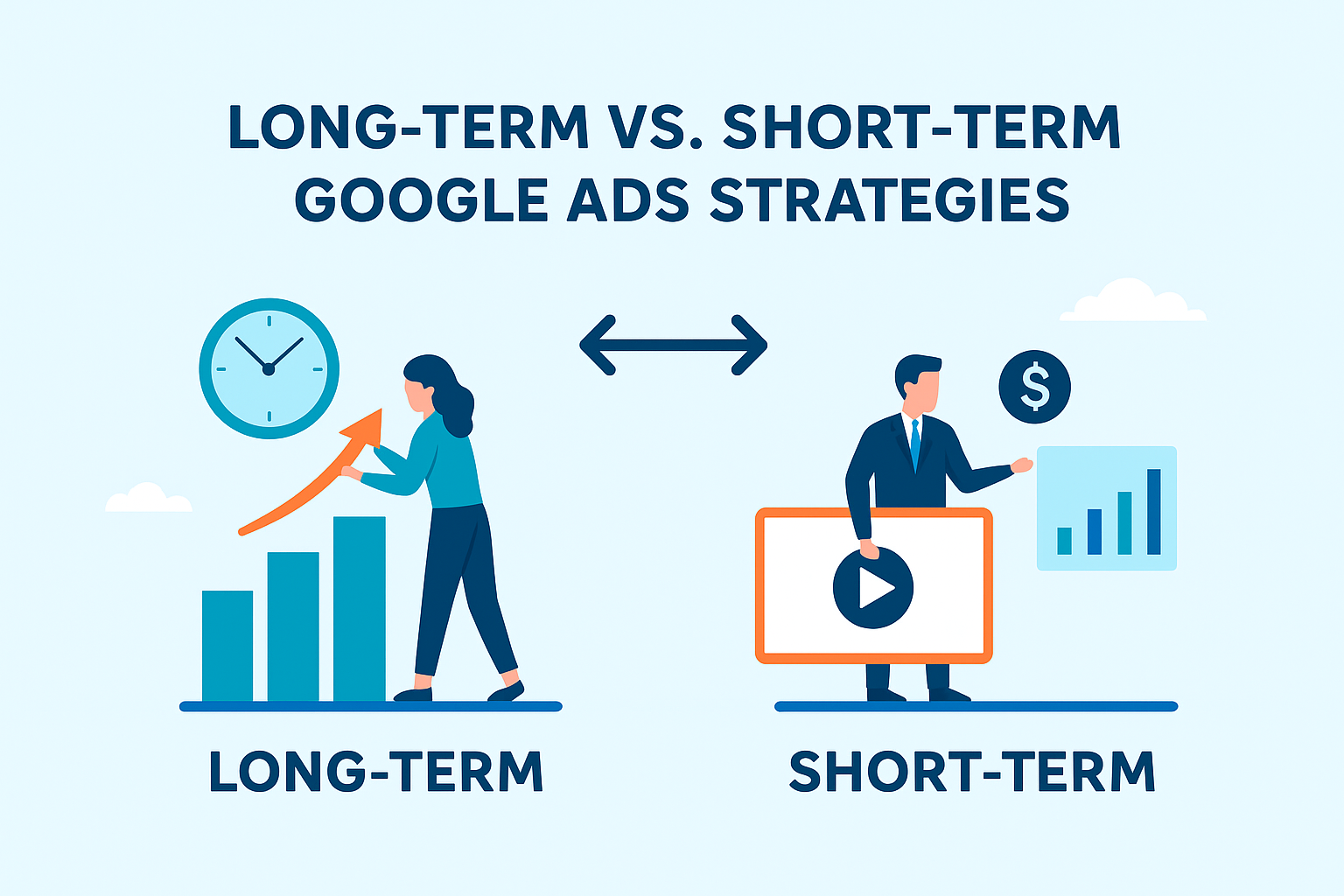
The answer is not the same for everyone. It depends on your goals, budget, and how you want your business to grow. In this blog, we will explore both long-term and short-term Google Ads strategies, compare their benefits, and help you decide which one is right for you.
What Are Short-Term Google Ads Strategies?
Short-term strategies are advertising plans designed to bring quick results in a short time. These strategies usually last from a few days to a few months. They are perfect for businesses that want to achieve fast goals, such as:
- Driving traffic to a new website
- Promoting a seasonal sale
- Boosting brand awareness quickly
- Testing new products or services
Examples of Short-Term Google Ads Strategies
- PPC Campaigns for Quick Sales
Running pay-per-click ads with highly targeted keywords can help you bring immediate visitors who are ready to buy. For example, a clothing store might run ads for “summer sale dresses” for two weeks. - Promotional Campaigns
Businesses often run limited-time offers, discounts, or holiday promotions with Google Ads. These ads create urgency and push customers to take action quickly. - Event-Based Ads
If you are hosting an event, workshop, or launch, short-term Google Ads can bring fast awareness and registrations within days.
Benefits of Short-Term Google Ads Strategies
- Instant Results
Unlike SEO, which takes months, Google Ads in the short term can drive visitors to your website within hours. - Flexibility
You can quickly adjust ads, budgets, and targeting if something is not working. - Perfect for Testing
Short-term campaigns help businesses test new markets, products, or ad copies without committing to a long-term budget. - Seasonal Opportunities
If your business relies on seasonal sales (like Black Friday or Christmas shopping), short-term strategies are a must.
Limitations of Short-Term Google Ads Strategies
While short-term strategies are great for quick wins, they also have drawbacks:
- Expensive in the long run: You must keep spending to keep traffic coming.
- No lasting brand value: Once the campaign ends, results stop immediately.
- High competition: Bidding on popular seasonal keywords can increase costs.
What Are Long-Term Google Ads Strategies?
Long-term strategies are designed to bring sustainable results over months or years. These strategies focus on building a strong brand presence, customer loyalty, and consistent growth.
They usually include broader planning, steady investment, and constant optimization. Businesses that want to scale up gradually and dominate their market use long-term strategies.
Examples of Long-Term Google Ads Strategies
- Brand Awareness Campaigns
Running consistent display or video ads helps people recognize and remember your brand. Over time, this builds trust and loyalty. - Remarketing Campaigns
Showing ads to people who already visited your site increases conversion rates. Long-term remarketing keeps your business in front of potential customers. - Smart Bidding Strategies
Google’s AI-driven bidding options (like Target CPA or ROAS) work better over time because they learn from data and improve automatically. - Content + Ads Combination
Promoting blogs, guides, or tutorials through Google Ads builds long-term authority. It positions your brand as a helpful resource rather than just a seller.
Benefits of Long-Term Google Ads Strategies
- Stronger Brand Value
Continuous exposure helps customers remember your brand even when they are not ready to buy immediately. - Better ROI Over Time
With proper optimization, long-term campaigns usually cost less per conversion as Google learns what works. - Customer Trust and Loyalty
Repeated exposure makes people trust your business more compared to one-time ads. - Sustainable Growth
You don’t just get quick sales; you also build a pipeline of future customers.
Limitations of Long-Term Google Ads Strategies
- Takes time: Results are not immediate. You may need months before seeing strong returns.
- Requires patience and budget: Not ideal for businesses looking for very fast sales.
- Ongoing management: Campaigns need constant monitoring, updates, and optimization.
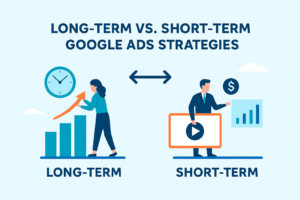
Key Differences Between Short-Term and Long-Term Google Ads Strategies
| Feature | Short-Term Strategies | Long-Term Strategies |
|---|---|---|
| Goal | Quick results, immediate sales | Brand growth, sustainable ROI |
| Duration | Days to months | Months to years |
| Cost | High in short bursts | Lower per conversion over time |
| Best For | Seasonal promotions, product launches, urgent campaigns | Consistent growth, brand building |
| Risk | Expensive if overused | Requires patience and steady budget |
Which One Should You Choose?
The right choice depends on your situation:
- If you are a new business or launching a product, short-term strategies will help you get fast attention.
- If you want to build a brand and grow steadily, long-term strategies are more suitable.
- Many successful businesses combine both: They use short-term ads for promotions while running long-term campaigns for growth.
Tips for Combining Short-Term and Long-Term Google Ads Strategies
- Start with Short-Term Wins
Run a few campaigns for quick results. This helps you learn which ads, keywords, and audiences work best. - Invest in Remarketing
Use data from short-term campaigns to create remarketing ads. This bridges the gap between short and long-term strategies. - Optimize Continuously
Don’t just “set and forget.” Keep checking performance, adjusting keywords, and improving ad copy. - Balance Your Budget
Spend some money on short-term campaigns for instant sales, but also dedicate a part of your budget for long-term brand growth. - Track Metrics Properly
Use Google Analytics and conversion tracking to see which campaigns bring quick wins and which ones deliver lasting value.
Conclusion
Both short-term and long-term Google Ads strategies play important roles in digital marketing. Short-term campaigns are best for immediate results, product launches, and seasonal promotions. Long-term campaigns are better for building brand trust, sustainable growth, and long-lasting customer relationships.
The smartest approach is not choosing one over the other, but combining both based on your goals. By balancing quick wins with steady growth, your business can make the most out of Google Ads and achieve success both today and in the future.