If you run Google Ads, you may have heard about something called Quality Score. Many advertisers worry about it, but they do not always understand how it works. The truth is that Quality Score is one of the most important factors that can decide whether your ad campaign succeeds or fails.
In this blog, we will explain Quality Score in simple words, why it matters, and how you can improve it with practical steps. By the end, you will know exactly what to do to make your ads perform better and save money at the same time.
What Is Quality Score?
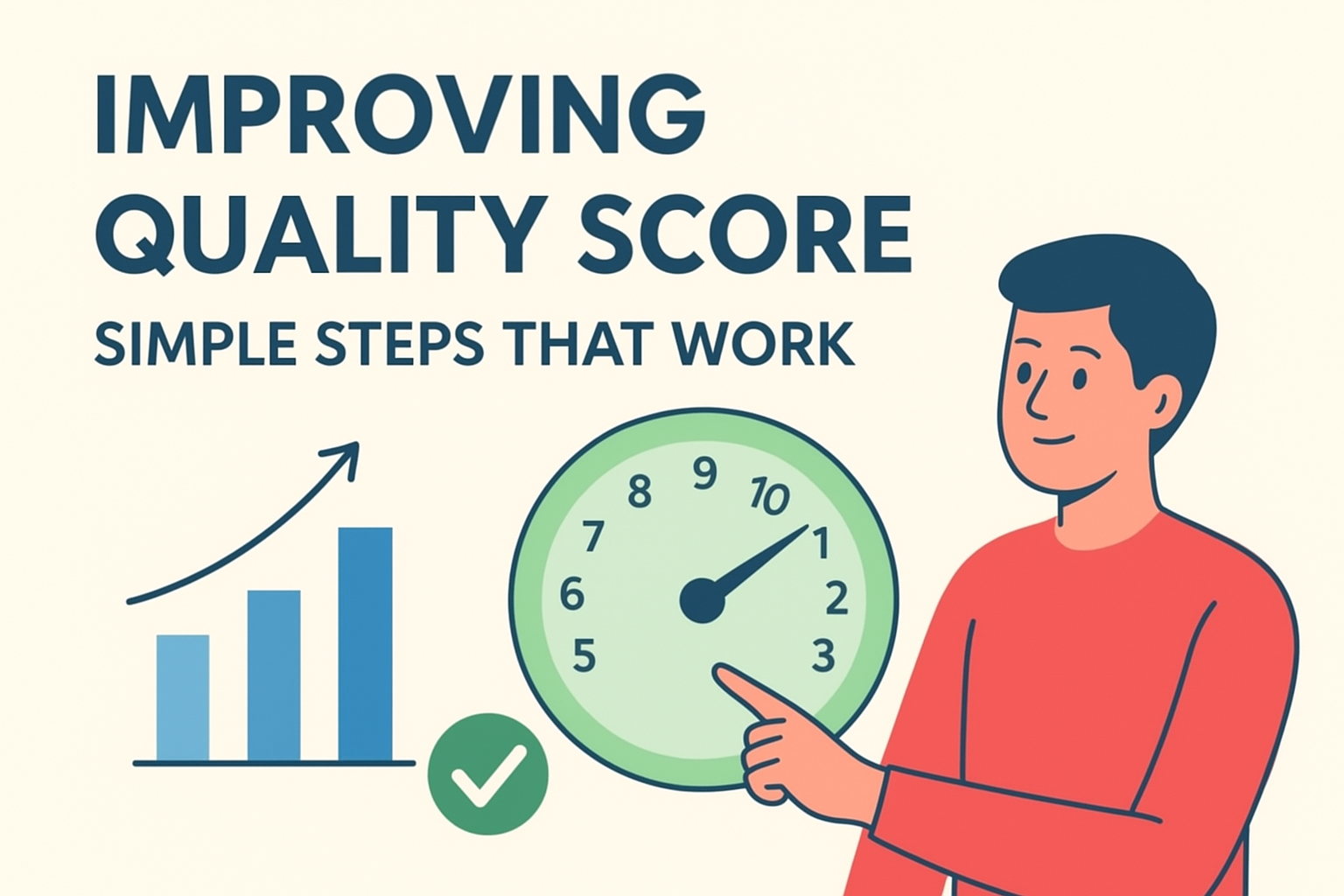
Quality Score is a rating that Google gives to your ads, keywords, and landing pages. It is measured on a scale from 1 to 10. The higher the number, the better your ad quality in the eyes of Google.
Think of it as a school grade. If you get a 9 or 10, Google thinks your ad is very relevant and useful. If you get a 3 or 4, it means something is wrong, and you need to fix it.
Google uses Quality Score to decide:
- How often your ad will appear.
- How much you will pay per click.
- Whether your ad will show above or below your competitors.
So, the higher your Quality Score, the less you pay and the more people see your ads.
Why Quality Score Matters
Some advertisers ignore Quality Score and only focus on bidding higher. But this can become expensive. Google rewards advertisers who create useful and relevant ads. With a higher Quality Score:
- You pay less for each click.
- Your ads get better placement.
- Your campaign delivers higher return on investment (ROI).
- You build trust with your audience.
In short, improving your Quality Score saves money and improves results at the same time.
What Makes Up Quality Score?
Google looks at three main factors when deciding your Quality Score:
- Expected Click-Through Rate (CTR):
This is how likely people are to click on your ad when they see it. If your ad text is clear, relevant, and attractive, your CTR will be higher. - Ad Relevance:
This measures how closely your ad matches the keywords people are searching for. If you are bidding on “best running shoes,” but your ad talks about “cheap sandals,” Google will mark your ad as less relevant. - Landing Page Experience:
This checks what happens after someone clicks your ad. Is your landing page useful? Does it load fast? Is it mobile-friendly? If visitors get what they expect, your score improves.
Simple Steps to Improve Quality Score
Now let’s go through practical steps that you can follow. Each step is simple but can bring powerful results when done correctly.
1. Choose the Right Keywords
Your keywords are the foundation of your campaign. If they are weak, your ads will not perform well.
- Use Google’s Keyword Planner to find the right keywords.
- Focus on long-tail keywords (like “buy running shoes online in New York”) instead of very broad ones (like “shoes”). Long-tail keywords are usually cheaper and more specific.
- Group similar keywords together. For example, put all “running shoe” terms in one group and “sandals” terms in another. This makes your ads more relevant.
2. Write Better Ad Copy
Your ad text must be clear, attractive, and directly related to the keyword.
- Include the keyword in the headline and description.
- Show your unique selling point (USP). For example, “Free shipping,” “50% discount,” or “Trusted by 10,000+ customers.”
- Add a call to action (CTA) like “Shop Now,” “Learn More,” or “Sign Up Today.”
A good ad copy grabs attention and convinces the user to click.
3. Improve Your Landing Page
Your landing page is where users land after clicking the ad. If it is weak, users will leave quickly, and Google will lower your score.
- Make sure the landing page matches the ad. If the ad is about “red running shoes,” the landing page should show red running shoes, not all kinds of footwear.
- Keep the page fast-loading. Slow websites turn visitors away.
- Ensure your page is mobile-friendly, as many people browse on phones.
- Add useful content, clear images, and easy navigation.
4. Use Ad Extensions
Ad extensions are extra pieces of information that appear with your ad. They do not cost extra but can improve performance.
Examples include:
- Sitelink extensions (links to different pages of your site).
- Call extensions (show your phone number).
- Location extensions (show your business address).
- Review extensions (share customer reviews).
Using extensions makes your ad bigger and more noticeable, which usually increases CTR.
5. Focus on CTR (Click-Through Rate)
CTR is one of the strongest signals for Quality Score. If more people click on your ad, Google assumes it is useful.
- Keep testing different ad versions (A/B testing).
- Try new headlines, CTAs, and offers.
- Use emotional or action words that encourage clicks.
Example: Instead of writing “Buy Shoes Online,” try “Grab Stylish Running Shoes – Free Delivery Today!”
6. Organize Campaigns into Ad Groups
Many advertisers make the mistake of putting too many keywords into one ad group. This reduces relevance.
- Create tight ad groups with only a few closely related keywords.
- Write ads that are specific to those keywords.
For example:
- Ad Group 1: “Running Shoes” → Ads about running shoes.
- Ad Group 2: “Sandals” → Ads about sandals.
This way, your ad relevance improves, and your Quality Score increases.
7. Monitor and Optimize Regularly
Improving Quality Score is not a one-time task. You need to keep checking and making changes.
- Look at which ads have low CTR and update them.
- Pause keywords that are too broad or not converting.
- Keep testing landing pages to see which version works better.
Common Mistakes to Avoid
While trying to improve Quality Score, many advertisers fall into traps. Here are some mistakes you should avoid:
- Using irrelevant keywords: Never bid on terms that do not match your product or service.
- Ignoring mobile users: A large part of traffic comes from phones, so mobile optimization is a must.
- Writing generic ads: Ads that do not stand out will not get clicks.
- Sending users to your homepage: Always send them to a relevant page, not just your main site.
Long-Term Benefits of a Good Quality Score
Improving Quality Score is not just about saving money. It also creates long-term success for your business.
- Better ROI: You get more sales or leads without increasing your budget.
- Customer trust: When users find your ads relevant, they are more likely to trust your brand.
- Competitive advantage: Even if competitors bid higher, you can still outrank them with a better Quality Score.
- Sustainable growth: Good campaigns can run for months or years with only small adjustments.
Final Thoughts
Quality Score may sound technical, but it is actually about user experience. Google wants to show the best ads to users. If your ads are useful, clear, and relevant, you will naturally get a higher score.
To summarize, here are the simple steps again:
- Pick the right keywords.
- Write clear and engaging ad copy.
- Improve your landing page.
- Use ad extensions.
- Focus on CTR.
- Organize campaigns properly.
- Keep monitoring and optimizing.
If you follow these steps, you will see your Quality Score improve over time. Remember, even small changes can bring big results.
Start applying these tips today, and you will not only improve your Quality Score but also build stronger, more profitable ad campaigns.