In today’s digital world, every business wants more traffic, more customers, and faster growth. When we talk about online marketing, two popular strategies always come forward — SEO (Search Engine Optimization) and Google Ads (Pay-Per-Click Advertising).
Some people think SEO and Google Ads are completely different. Others think they should pick one and ignore the other. But the truth is: when you combine SEO and Google Ads, you can get faster and long-lasting results.
This blog will explain in simple words how SEO and Google Ads work, why they are powerful together, and how you can use both for your business growth.
Understanding SEO (Search Engine Optimization)
SEO means improving your website so that it ranks higher in organic search results on Google. For example, if someone searches “best running shoes,” and your website is optimized, it can appear on the first page without paying for ads.
Key parts of SEO:
- On-page SEO – Writing quality content, using keywords, and optimizing titles, headings, and meta descriptions.
- Off-page SEO – Getting backlinks, improving authority, and building trust.
- Technical SEO – Speed of website, mobile-friendliness, site structure, and security (HTTPS).
Advantages of SEO:
- Free clicks (no direct payment for traffic).
- Builds long-term trust and authority.
- Works 24/7 even when ads are off.
- Great for long-term brand building.
But SEO takes time. You may need 3–6 months or even longer to see big results.
Understanding Google Ads (PPC Advertising)
Google Ads allow businesses to show their website at the top of Google search results instantly. You only pay when someone clicks on your ad (Pay-Per-Click).
For example, if you run a bakery and someone searches “birthday cakes near me,” your ad can appear above all organic results.
Key types of Google Ads:
- Search Ads – Text ads that appear when someone searches on Google.
- Display Ads – Banner ads shown on websites.
- Shopping Ads – Product-based ads for eCommerce.
- Video Ads – Ads shown on YouTube.
Advantages of Google Ads:
- Instant visibility at the top of search results.
- Easy to target specific keywords, locations, and audiences.
- Provides measurable results with detailed analytics.
- Great for testing offers and messages quickly.
But PPC has costs. Once you stop paying, your ads disappear.
Why Combine SEO and Google Ads?
Now the main question: Why should you combine SEO and Google Ads instead of using only one?
Here are some clear reasons:
- Short-term + Long-term Benefits
- SEO gives you long-term free traffic, but it takes time.
- Google Ads gives you instant visibility, but only while you pay.
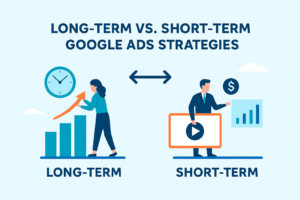
- Together, they balance short-term results and long-term growth.
- More Visibility on Google
- When your ad appears at the top and your website also ranks in organic results, you cover more space on the search page.
- This increases trust and the chances of getting a click.
- Keyword Insights
- Google Ads shows which keywords bring the best results.
- You can use that data to improve your SEO strategy.
- Better Click-through Rates (CTR)
- Studies show that when people see both an ad and an organic result for the same brand, they are more likely to click.
- Improved Conversion Rates
- SEO builds trust, Google Ads brings targeted traffic. Together, they often lead to better conversions.
Step-by-Step Guide: How to Combine SEO and Google Ads
Let’s now see how you can practically combine both strategies.
1. Use Google Ads to Test Keywords for SEO
SEO requires effort to rank keywords, and sometimes you don’t know which keywords will actually convert.
- Start Google Ads campaigns with different keywords.
- See which ones bring sales, calls, or sign-ups.
- Focus your SEO content strategy on those proven keywords.
2. Share Data Between SEO and Ads
- Use Google Analytics and Google Search Console.
- Compare organic traffic keywords with paid traffic keywords.
- If a keyword works well in ads but doesn’t rank in SEO, create new content for it.
- If a keyword ranks well in SEO, reduce ad spending on that keyword and invest in others.
3. Dominate the Search Results
- Run ads on your most important keywords even if you already rank high in SEO.
- This gives you double visibility and reduces clicks going to your competitors.
4. Retargeting with Google Ads
SEO brings free visitors, but not everyone buys on their first visit.
- Use Google Ads retargeting to show ads to people who already visited your site through SEO.
- This keeps your brand in their mind and increases chances of conversion.
5. Improve Quality Score with SEO Content
Google Ads quality score depends on relevance, landing page quality, and user experience.
- Good SEO practices like fast-loading pages, mobile optimization, and high-quality content improve landing pages.
- This reduces ad costs and improves performance.
6. Use Ads to Promote New Content
When you publish new blog posts or product pages, it takes time to rank in SEO.
- Use Google Ads to give them an initial push.
- This brings quick traffic while SEO builds up.
7. Local SEO + Local Ads
If you run a local business, combine Google Business Profile optimization (local SEO) with Google Ads targeting your area.
- This ensures your business appears both in the local map pack and in ads.
Common Mistakes to Avoid
While combining SEO and Google Ads is powerful, avoid these mistakes:
- Relying only on Ads – Paid traffic is not permanent; don’t stop SEO.
- Ignoring Analytics – Always track what works; otherwise, you waste money.
- Targeting Wrong Keywords – Don’t choose only high-competition keywords. Focus on long-tail keywords too.
- Poor Landing Pages – Even with ads and SEO, a bad landing page won’t convert.
- Not Aligning Teams – If SEO and PPC teams don’t share data, you lose opportunities.
Best Practices for Combining SEO and Google Ads
- Start with a clear goal: traffic, leads, or sales.
- Always track performance using Google Analytics.
- Use the same tone, message, and offers across both ads and SEO.
- Keep testing, adjusting, and improving.
- Think of SEO and Ads not as competitors but as partners.
Real-Life Example
Let’s say you run an online clothing store.
- With SEO, you write blog posts like “Best Summer Outfits 2025” and optimize product pages. Over time, they rank and bring free traffic.
- With Google Ads, you target keywords like “buy summer dress online” and show ads instantly.
- The ad data shows “affordable summer dress” brings the most sales. So you optimize your SEO pages with this keyword.
- Now, you rank organically for that keyword and run ads.
- Result: More traffic, higher trust, and more sales.
Conclusion
Both SEO and Google Ads are strong on their own, but together they create a powerful growth engine. SEO builds a long-term foundation, while Google Ads gives immediate results. By combining keyword research, data sharing, retargeting, and smart testing, businesses can enjoy faster growth, more visibility, and higher conversions.
If you are running only SEO or only Google Ads, now is the time to combine them. With the right balance, you will not only get quick wins but also build a sustainable online presence.