Digital advertising is one of the most effective ways to grow any business online. However, running ads without knowing what works best can waste both time and money. This is where A/B testing comes in.
A/B testing is a simple but powerful method to compare two or more versions of your ad and find out which one performs better. By making small changes and testing them, you can understand what attracts your audience, increase clicks, and improve conversions.
In this article, we will explain what A/B testing is, why it matters, and the best practices beginners should follow to get maximum benefits. The language will be simple, so even if you are new to digital marketing, you can easily understand and apply these tips.
What is A/B Testing in Ads?
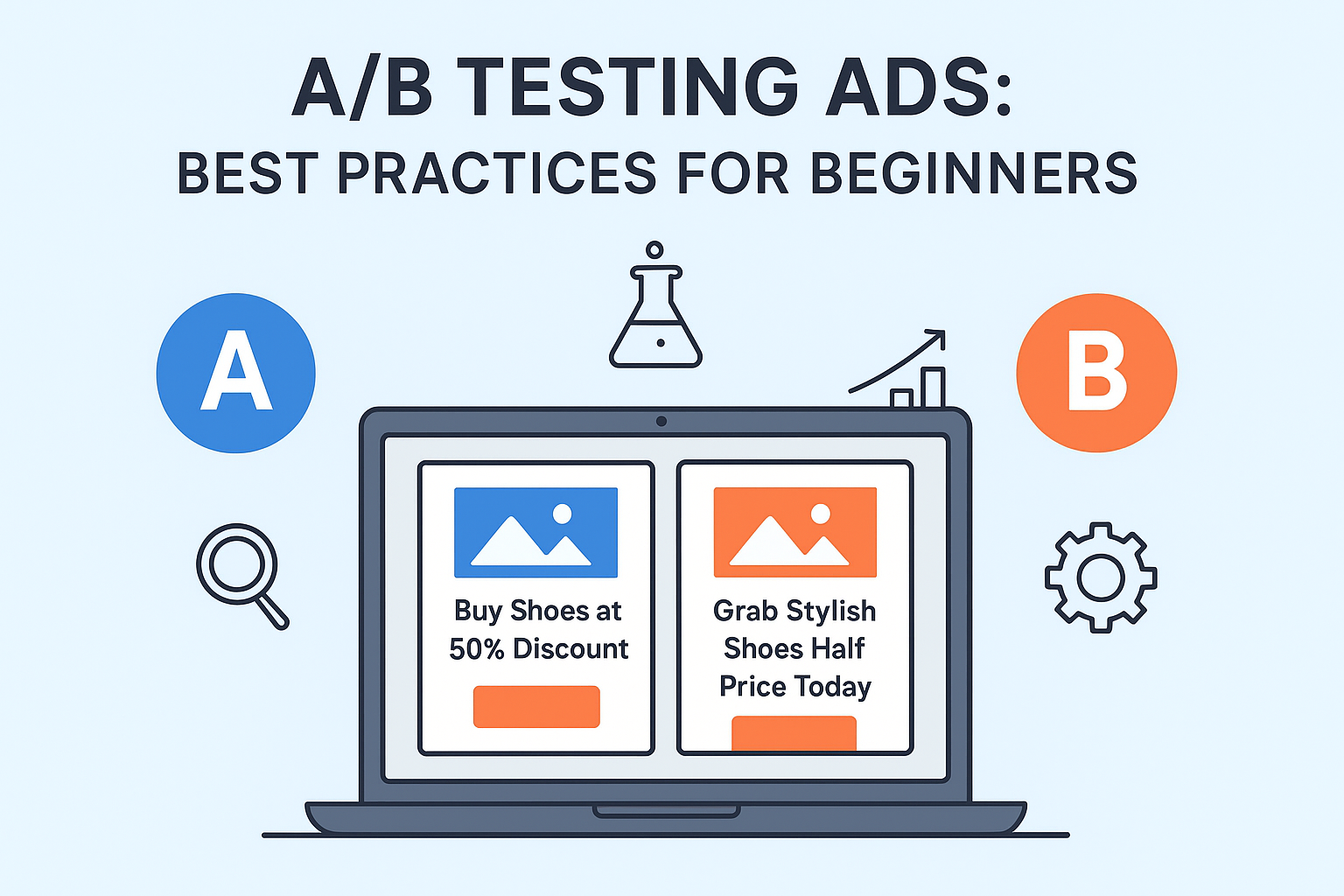
A/B testing, also called split testing, is the process of showing two different versions of an ad to different groups of people. For example:
- Version A: A headline saying “Buy Shoes at 50% Discount.”
- Version B: A headline saying “Grab Stylish Shoes Half Price Today.”
Both ads promote the same product, but they use different words. You run them at the same time, and then check which one gets more clicks.
The version that performs better tells you what your audience likes. Over time, this helps you make smarter decisions about your ad design, text, images, or even call-to-action buttons.
Why A/B Testing Ads is Important
Many beginners think they can create one ad and leave it running for weeks. The problem is that you don’t know if that ad is the best possible version.
Here are a few reasons why A/B testing is so important:
- Saves money – You invest only in the ads that bring results.
- Improves engagement – Better ads mean more clicks, sign-ups, or sales.
- Reduces guesswork – You rely on data, not just assumptions.
- Builds audience knowledge – You understand what your customers like and dislike.
- Boosts conversions – Small changes can lead to big improvements.
In short, A/B testing helps you avoid wasting money on poor ads and ensures your budget is used wisely.
Things You Can Test in Ads
A common question beginners ask is: “What exactly should I test in my ads?” The answer is simple—almost every part of an ad can be tested. Here are the main areas:
- Headlines – Try different words, lengths, or tones.
- Images or Videos – Test product photos vs. lifestyle photos.
- Call-to-Action (CTA) – Compare “Shop Now” with “Grab Yours Today.”
- Ad Copy – Change the style of writing (short vs. detailed).
- Colors and Design – Backgrounds, button colors, or layouts.
- Audience Targeting – Different age groups, interests, or locations.
- Ad Placement – Try Facebook feed ads vs. Instagram stories.
Remember: test one element at a time. If you change too many things at once, you won’t know what actually made the difference.
Step-by-Step Guide to A/B Testing for Beginners
Here’s a simple process you can follow:
1. Define Your Goal
Start with a clear purpose. Do you want more clicks, app downloads, sign-ups, or purchases? Knowing your main goal helps you measure success.
2. Pick One Variable to Test
Choose one element of your ad to change. For example, test the headline only. Keep everything else the same.
3. Create Two Versions
Make two ads:
- Version A (the control) – your original ad.
- Version B (the variation) – the new version with one change.
4. Run the Ads Simultaneously
To get accurate results, run both ads at the same time. If you test them at different times, outside factors (like season, holidays, or trends) may affect results.
5. Measure Results with Data
Use advertising tools like Google Ads, Facebook Ads Manager, or analytics software to track performance. Look at click-through rates (CTR), conversions, or cost per action.
6. Pick the Winner
The version that gives better results becomes your winning ad. Keep that version and stop the weaker one.
7. Repeat the Process
A/B testing is not a one-time job. You should keep testing new ideas regularly because audience preferences change over time.
Best Practices for A/B Testing Ads
To make your A/B testing more effective, follow these best practices:
1. Test One Change at a Time
If you test multiple things (like headline, image, and CTA together), you won’t know which change worked. Always keep only one difference between version A and version B.
2. Collect Enough Data
Do not stop your test too early. Sometimes ads need a few days to reach enough people. If you stop too soon, the results may be misleading.
3. Keep It Simple
Don’t make very complex ads. Simple, clear ads usually perform better. Beginners often try too many designs at once, but clarity always wins.
4. Test Audience Segments
Sometimes the same ad works differently for different groups. Test your ads with men vs. women, younger vs. older people, or different countries.
5. Track the Right Metrics
Choose metrics that match your goal. If your aim is sales, don’t focus only on clicks. Instead, track conversion rate and return on ad spend (ROAS).
6. Don’t Over-Test
Yes, testing is important, but testing too many small details (like button color every day) can waste time. Focus on major elements that truly impact performance.
7. Use Tools for Efficiency
Google Optimize, Optimizely, or built-in testing features of ad platforms can make testing easier. Beginners should start with the tools inside Google Ads or Facebook Ads Manager.
8. Learn From Each Test
Even if version B fails, you still learn what doesn’t work. Every test gives you insights for future ads.
Common Mistakes to Avoid
Beginners often make some common mistakes in A/B testing. Avoid these to save time and money:
- Changing too many elements at once – leads to confusion.
- Running tests too short – gives incomplete data.
- Not having a clear goal – makes results meaningless.
- Ignoring the winning ad – some people test but forget to apply results.
- Copying others blindly – what works for one business may not work for yours.
Benefits of A/B Testing for Beginners
By now, you can see that A/B testing is more than just a marketing trick. It is a reliable way to grow your ads performance step by step. Some benefits include:
- Better Return on Investment (ROI) – You spend less money to get more results.
- Stronger Customer Understanding – You know your audience better.
- Reduced Risk – You avoid losing money on poor ads.
- Continuous Improvement – Every test makes your ads better.
- Confidence in Decisions – You rely on facts, not guesses.
Conclusion
A/B testing is a must-learn skill for anyone who wants to run successful ads online. It may sound technical, but in reality, it is a simple process of comparing two versions and choosing the better one.
As a beginner, start small: test your headlines, images, or call-to-actions. Always change one thing at a time, run your tests long enough, and track the results carefully. Over time, you will see which style of ads connects best with your audience.
Remember, A/B testing is not about finding one perfect ad. It is about constant learning and improvement. Each test brings you closer to ads that not only save money but also bring better engagement, sales, and long-term success.
By following these best practices, even beginners can use A/B testing to grow their online business confidently and effectively.